
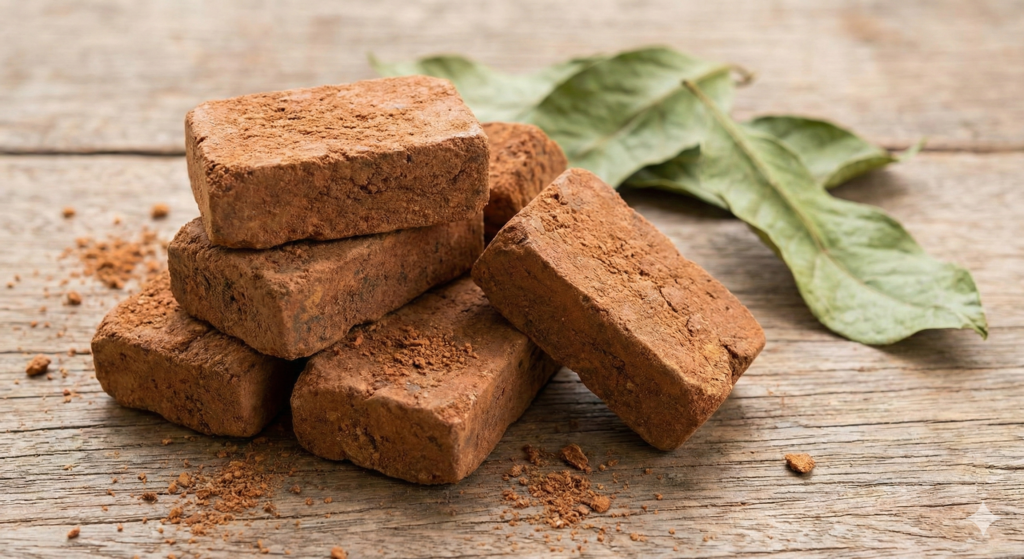
Uncaria Gambier, known locally in Indonesia as Gambir, is a dried extract derived from the leaves and young twigs of the Uncaria gambir plant. While it has been a staple in Southeast Asian culture for centuries—often used in betel chewing—it is now a critical raw material for global industries ranging from leather tanning to modern pharmaceuticals.
What is Uncaria Gambier? Unlike many herbal extracts, Gambier is not mined or tapped; it is processed. In West Sumatra, the heartland of Gambier production, farmers harvest the leaves, boil them to extract the sap, and then press and dry the residue into solid blocks or cakes.
Key Chemical Components The value of Gambier lies in its chemical profile. High-quality Indonesian Gambier typically contains:
- Catechins (40-70%): A potent antioxidant.
- Tannins (20-80%): specifically catechu-tannic acid, essential for tanning.
Industrial Applications
- Leather Tanning: It is a “vegetable tannin” that produces reddish-brown, soft, and durable leather.
- Textile Dyeing: Used notably in traditional Batik production for earthy tones.
- Pharmaceuticals: Used for its astringent and antibacterial properties.
Why Source from Indonesia? Indonesia supplies the vast majority of the world’s Gambier. By sourcing directly from Indonesian exporters, buyers ensure they are getting pure product directly from the origin, minimizing adulteration risks.
Want to know how to judge quality? Read our guide on Buying Gambier: Quality Grades Explained.
Learn more about the botany of Uncaria gambir on Wikipedia.